Top Commodities to Trade: What They Are and Why They Matter - Maven Trading
Written by Seb on June 15, 2026.
In this guide, we’ll explore the top commodities to trade, explain what drives their prices, and show why they matter for traders and portfolio diversification. You’ll learn which commodities dominate global markets and how to approach trading them effectively.
Understanding Commodities: Top Commodities to Trade
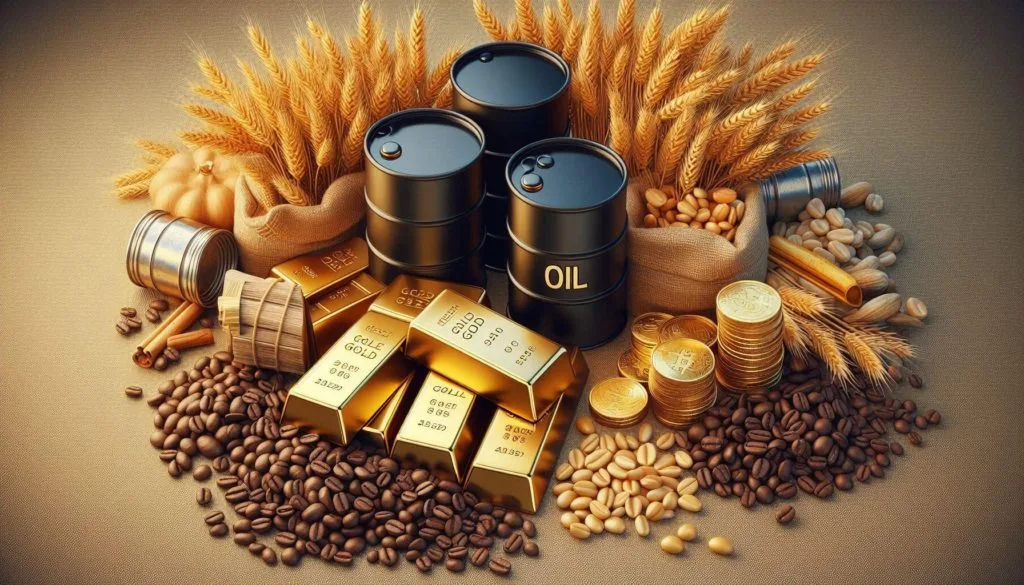
Commodities are high-demand physical goods like oil, metals, or agricultural products that trade through spot markets or standardized futures contracts. They’re fungible, meaning one unit can be exchanged for another without difference – a barrel of WTI crude oil is identical to any other barrel of WTI crude oil.
Historical Context
The Japanese candlestick patterns traders use today were first created for trading rice, one of the earliest agricultural commodities. From those early markets to modern exchanges, commodities have shaped global trade and remain central to how economies function.
Key Characteristics
Standardization: Each commodity must meet strict quality standards set by exchanges, ensuring uniformity across all units.
High Volume Trading: This standardization allows commodities to be traded in large volumes on futures and derivative markets.
Global Pricing: Commodities serve as benchmarks that guide pricing worldwide across physical and financial markets.
Types of Commodities: Soft vs. Hard
Soft Commodities (Agricultural)
Definition: Agricultural or livestock products that can be grown or raised, including wheat, corn, coffee, and cattle.
Supply Characteristics:
Directly tied to seasons and harvest cycles
Vulnerable to weather events (droughts, floods, frosts, pests)
Shorter price cycles (typically one year or less)
High volatility due to unpredictable natural factors
Price Drivers: Each new season brings fresh supply, making prices highly responsive to harvest conditions and weather forecasts.
Hard Commodities (Extracted)
Definition: Minerals and fuels extracted or mined, including oil, natural gas, copper, and gold.
Supply Characteristics:
Longer production cycles (years of investment required)
Supply expansion requires significant capital
Demand follows overall economic growth
Less seasonal variation
Price Drivers: Industrial metals move with economic growth and infrastructure spending, while energy commodities respond to geopolitics and production decisions (OPEC, sanctions, etc.).
Top Commodities to Trade: The 6 Most Popular Markets
1. Gold: The Safe-Haven Asset
Why Gold Matters: Gold is a reliable store of value that holds up when financial markets face pressure. It serves as a popular hedge against inflation and economic uncertainty.
Key Price Drivers:
Interest rate changes (inverse relationship)
Global economic uncertainty
Inflation expectations
Currency strength (especially USD)
Central bank policies
Why Trade Gold:
Safe-haven demand: Investors rush to gold during uncertainty, creating strong price moves
High liquidity: One of the most actively traded commodities globally
Volatility: Quick reactions to macro events offer trading opportunities
Accessibility: Easy access through ETFs, futures, and CFDs
How to Trade: Physical bullion, gold ETFs, futures contracts, or CFDs through brokerage accounts.
2. Crude Oil (WTI & Brent): The World’s Most Liquid Commodity
Benchmarks:
WTI (West Texas Intermediate): U.S. benchmark
Brent Crude: Global benchmark
Millions of barrels trade daily across physical and derivative markets, making crude oil the most liquid commodity worldwide.
Supply Factors:
OPEC production decisions
Geopolitical disruptions
U.S. shale production levels
Storage capacity and costs
Demand Factors:
Global economic growth
Transportation and industrial activity
Seasonal changes (driving season, heating season)
Market Factors:
Speculation and investor positioning
Currency exchange rates (USD strength)
Energy transition policies
Broader Impact: Oil price movements spill over into stock markets, inflation rates, and currencies of oil-exporting nations (Canada, Russia, Saudi Arabia).
How to Trade: Oil ETFs, futures contracts, or CFDs through online brokerages or funded trading accounts.
3. Natural Gas: The Weather-Driven Energy Source
Why Natural Gas Matters: Natural gas heats homes and businesses, making its price directly tied to utility bills. It’s one of the most volatile energy commodities, with demand swinging based on extreme weather.
Key Benchmark: Henry Hub futures (CME/NYMEX) averages 400,000 contracts daily with 1.7 million open contracts, making it one of the world’s most active commodity markets.
Price Drivers:
Weather extremes (cold winters, hot summers)
Storage levels and inventory reports
LNG export demand
Competition with renewable energy
Industrial demand
Global Markets: Liquefied natural gas (LNG) has made regional markets more interconnected, linking U.S., European (NBP), and Asian prices.
How to Trade: Futures contracts, natural gas ETFs, or CFDs through commodity brokers.
4. Copper: The Economic Barometer
Why Copper Matters: Copper is the backbone of electrical and electronic industries – it’s in your home wiring, car, and phone. Strong copper demand signals that factories are running, construction is booming, and the global economy is growing.
Key Price Drivers:
China’s economy: Uses ~50% of global copper supply
U.S. and EU industrial production data
Currency movements (weaker USD lifts prices)
Mining disruptions (Chilean strikes, political instability)
Clean energy policies (EVs, solar, wind infrastructure)
Inventory levels on LME and COMEX
Trading Venues: London Metal Exchange (LME) and CME (COMEX).
How to Trade:
Futures contracts (COMEX, LME)
Copper ETFs (e.g., CPER)
Mining company stocks
CFDs through brokers
5. Wheat: The Global Food Staple
Why Wheat Matters: Wheat is a foundational agricultural commodity used in bread, pasta, and countless products worldwide. It trades on multiple global exchanges with high liquidity.
Trading Venues:
CBOT (Chicago Board of Trade)
ICE-US (Minneapolis)
Euronext Paris
Russian and Indian exchanges
Key Price Drivers:
Global grain demand (food and animal feed)
USDA crop reports and yield forecasts
Weather in major growing regions
Energy prices (fertilizer costs, ethanol demand)
Currency shifts (weak USD supports prices)
Export policies and trade restrictions
How to Trade: Wheat futures, agricultural ETFs, or CFDs.
6. Corn (Maize): The Multi-Use Crop
Why Corn Matters: Corn is the most widely grown crop in the U.S., used in animal feed, ethanol production, and food products. Corn futures are highly liquid with ~350,000 contracts traded daily.
Agricultural Factors:
USDA planting forecasts and acreage reports
Midwest weather (droughts, floods)
Seasonal storage reports
Demand Factors:
Export demand (China, Mexico)
Ethanol mandates and fuel policy
Animal feed consumption
Market Factors:
Crude oil prices (affects ethanol profitability)
Currency movements (USD strength)
Speculative positioning
How to Trade: Corn futures (CBOT), agricultural ETFs, or CFDs.
Why Trading the Top Commodities to Trade Matters
1. Distinct Return Profile
When you trade stocks, returns depend on company earnings and performance. Commodities offer returns driven by global supply, demand, and macroeconomic shifts – giving you exposure to different market forces.
2. Portfolio Diversification
Commodities often hold value or rise when traditional markets face instability or inflation spikes. This creates a more balanced, resilient portfolio that can weather various market conditions.
3. Inflation Hedge
As physical goods, commodities typically rise in price during inflationary periods, helping protect purchasing power when currency values decline.
4. Specific Risk Management
Real-World Example: An airline buys oil futures to lock in fuel costs. If crude oil rises from $70 to $90 per barrel, their hedge keeps expenses steady instead of eroding profits.
For Traders: You can use similar strategies – buying gold shields against currency drops, trading agricultural commodities hedges food price risk.
5. Macroeconomic Positioning
Commodities are priced in U.S. dollars, so price swings directly impact global inflation and currency strength.
The Ripple Effect:
Oil prices spike
Shipping and production costs rise
Consumer goods prices increase (inflation)
Central banks raise interest rates
Dollar strengthens
Bonds, equities, and currencies react
Your Advantage: By trading commodities, you position yourself at the source of these moves, where volatility and opportunity begin – before they ripple through other asset classes.
6. Central Bank Monitoring
Central banks closely watch commodity-driven inflation. Sharp increases in oil and food prices historically lead to tighter monetary policy and slower economic growth, creating trading opportunities across multiple markets.
Key Takeaways
Trading the top commodities to trade offers diversification, inflation hedging, and market opportunities: They’re standardized and physical, yet driven by real-world production and consumption patterns.
Top traded commodities: Crude oil, gold, natural gas, copper, wheat, and corn dominate global markets due to their essential role in the economy.
Multiple benefits: Commodities offer portfolio diversification, inflation hedging, and profit opportunities through price volatility influenced by geopolitics, weather, and technology.
Risk management is essential: Volatility and external shocks can amplify both gains and losses. Successful commodity trading requires disciplined risk management, accurate data, and an informed approach.
Start Trading Commodities with Maven
Ready to trade commodities with virtual capital? Maven Trading offers simulated funded trader programs with access to 400+ virtual assets including all major commodities.
We use cookies to enhance your browsing experience, serve personalized ads or content, and analyze our traffic. By clicking "Accept All", you consent to our use of cookies. Read our Cookie Policy for more details.
Enter your e-mail for a chance to win a 100k account!*
*by providing your e-mail, you are opting in to promotional messages.
 ES
 PT
 Return to main blog page