FOMO Trading: What It Is and How to Stop Chasing Trades
Written by Hunter on November 13, 2026.
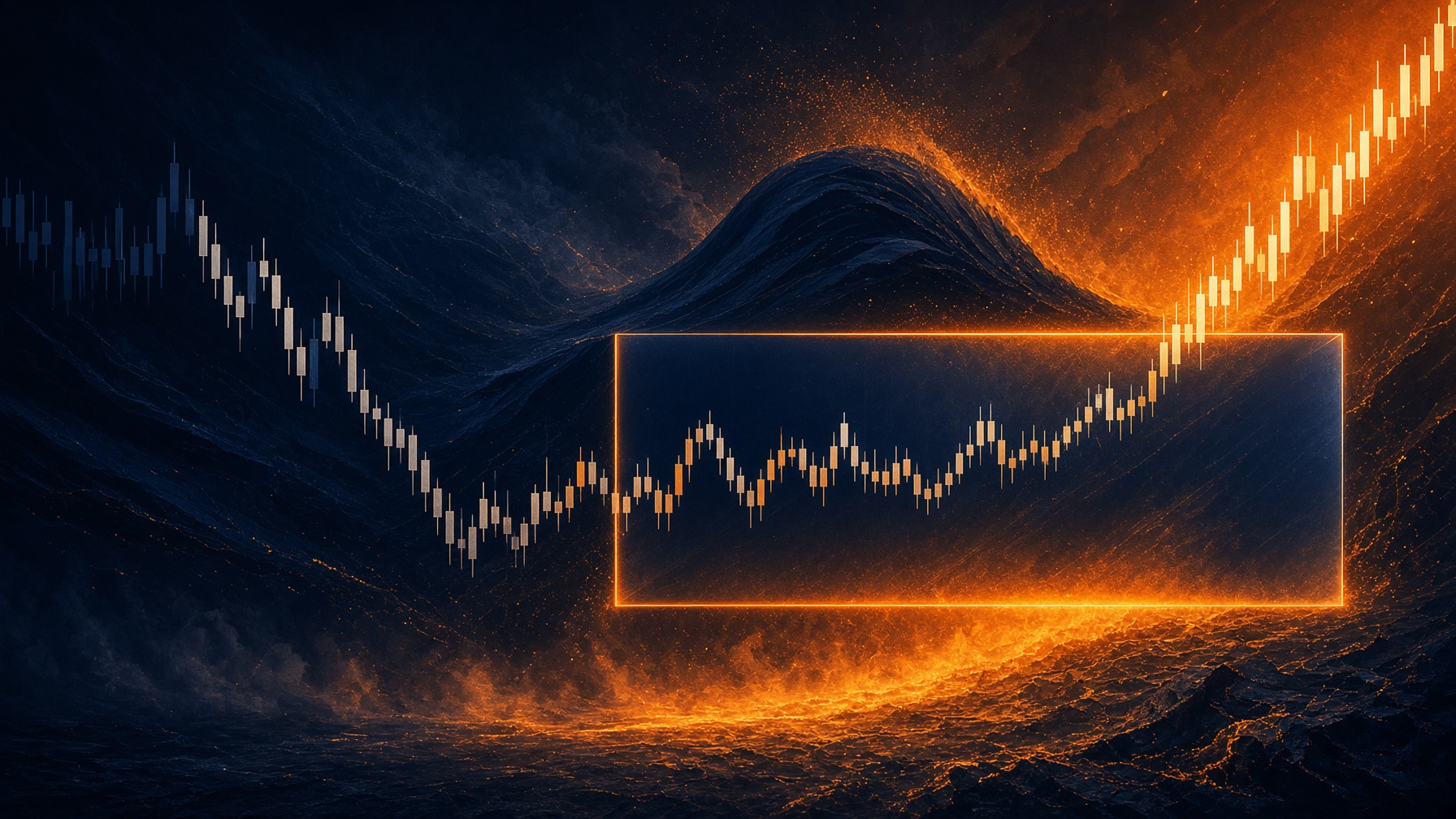
You watched EUR/USD sit quietly for two hours. You stayed out, because your plan said to wait. Then a news headline lands, price rips 60 pips in minutes, and every instinct tells you to jump in before it is gone. You buy near the top. Price snaps back. That moment has a name: FOMO trading.
Quick answer: FOMO trading is entering a trade because you fear missing a price move, not because your strategy gave a valid signal. It usually means late entries, oversized positions and weak stop placement, which is why it is a common cause of failed funded-trader challenges.
In this guide we cover what FOMO is, how to spot it, why it is especially costly on a challenge account, and seven practical rules to stop it.
What is FOMO in trading?
Why FOMO is so costly on a challenge account
Seven warning signs you are trading on FOMO
Seven rules to stop chasing trades
A pre-trade FOMO checklist
FAQ
What is FOMO in trading?
FOMO, short for fear of missing out, is the urge to act on a market move because other people appear to be profiting and you are not. In trading, FOMO is an emotional entry: the trade is triggered by anxiety about the move, not by your entry criteria.
FOMO is not the same as a good breakout trade. A breakout trade follows a rule you defined in advance, with a planned entry, stop and target. A FOMO trade has none of those. The entry is wherever price is when the discomfort becomes unbearable.
It also differs from related habits. Revenge trading is a reaction to a loss. Overtrading is often a reaction to overconfidence or boredom. FOMO is a reaction to watching opportunity leave without you.
Why FOMO trading is so costly on a challenge account
On a challenge, the rules are fixed: a profit target, a drawdown limit and usually a daily loss limit. FOMO attacks all three at once.
Bad entry price. You enter after the move has already run, so your stop must be wider or your reward is smaller. Risk-to-reward gets worse before the trade even starts.
Oversizing. Traders chasing a move often add size to make up for the late entry. A single oversized loss can use up a large part of a daily loss limit.
No plan for the exit. Without a stop and target set in advance, losses are managed by hope.
Pressure from the clock. Challenges feel time-bound even when they are not. Watching a move pass can feel like watching your pass chance pass, which fuels the urge.
Remember that a challenge on a simulated account is a test of process. If you want to understand the structure you are working within, read our guide on what a prop firm is.
Seven warning signs you are trading on FOMO
You enter after a large candle has already closed, not on a pullback or planned level.
You cannot state your stop-loss and target before clicking buy or sell.
You check social feeds or chat rooms for what others are trading right before you enter.
You take trades on pairs or sessions outside your normal plan.
You increase lot size because the move feels certain.
You tell yourself this one is different or it will not come back.
You feel relief when you enter, not calm. Relief means the trade was about the feeling.
Tip: If three or more of these are true, close the chart for ten minutes. The move will still be there, or it will not, and neither outcome is an emergency.
Seven rules to stop chasing trades
Rule 1: Write the entry rule in one sentence
If you cannot describe your entry trigger in a single sentence, you do not have one. Vague criteria are where FOMO hides.
Rule 2: Set a maximum distance from your level
Decide in advance how far past your planned entry you will still take the trade. A simple version: if price has moved more than a set fraction of your usual stop distance beyond the level, the trade is off.
Rule 3: Accept that missing a trade costs nothing
A missed move is not a loss. It does not touch your balance or your drawdown. Only a bad trade can do that. Write this on a sticky note if it helps.
Rule 4: Use alerts, not screen-watching
Staring at fast markets amplifies the urge to act. Set price alerts at your levels and step away. You will take trades from a planned state, not a reactive one.
Rule 5: Cap trades per day
A hard limit, such as two or three setups a day, forces selectivity. When you hit the cap, you are finished, even if a perfect-looking move appears afterward.
Rule 6: Trade the sessions you planned for
Many FOMO entries happen when traders drift into volatile periods they did not prepare for. Know which hours you trade. Our forex trading sessions guide shows how volatility changes across the day.
Rule 7: Keep a FOMO log
Each time you feel the urge, note the pair, time, trigger and whether you acted. After a few weeks you will see patterns, for example the same news event or the same hour. Patterns can be planned around.
A pre-trade FOMO checklist
Before every entry, answer these five questions. If any answer is no, skip the trade.
Does this setup match a rule in my written plan?
Are my entry, stop and target set before I click?
Is my position size the same as my plan, not larger?
Would I take this trade if I had not seen the move that already happened?
Is my risk-to-reward still acceptable at this price?
FOMO means fear of missing out. In trading it is the urge to enter a move because you worry about missing profit, even when the trade does not meet your strategy rules.
How do I stop FOMO trading?
Define your entry rule in writing, set a maximum chase distance, use price alerts instead of watching the screen, cap your daily trades and keep a log of every urge. Consistent rules beat willpower.
Is FOMO the same as revenge trading?
No. FOMO is triggered by watching a move without you. Revenge trading is triggered by a loss. Both are emotional entries, but the triggers and fixes differ.
Can FOMO cause you to fail a funded trader challenge?
Yes. Chasing entries typically means worse risk-to-reward and larger losses, which can breach daily loss or maximum drawdown limits. Process discipline is usually more important than any single trade.
Is it ever fine to enter late on a strong move?
Only if your plan has a defined rule for it, such as a pullback entry or a continuation setup, with a planned stop and size. A rule-based late entry is a strategy. An unplanned one is FOMO.
Disclaimer: This article is for educational purposes only and is not financial advice. Trading forex and CFDs carries a high level of risk. Maven Trading offers simulated evaluation accounts, not live brokerage accounts.
We use cookies to enhance your browsing experience, serve personalized ads or content, and analyze our traffic. By clicking "Accept All", you consent to our use of cookies. Read our Cookie Policy for more details.
Enter your e-mail for a chance to win a 100k account!*
*by providing your e-mail, you are opting in to promotional messages.
 ES
 PT
 Return to main blog page