How to Read an Economic Calendar for Forex - Maven Trading
Written by Seb on March 26, 2026.Introduction
Learning how to read an economic calendar for forex trading is a small habit that can make a big difference. As a forex trader, it provides you with the data you need for fundamental analysis, prepares you for market volatility, and helps you make better decisions. Even checking the calendar for 1 minute a day before taking trades can help you avoid being caught off guard and prepare you for profitable opportunities.
In this article, we will be covering:
- What an economic calendar is
- How to read an economic calendar step by step
- Key events to watch and how they affect currency markets
- How to apply the economic calendar to your trading strategy
- Common mistakes traders make with economic news and how to avoid them
What Is an Economic Calendar?
An economic calendar is a resource that shows you when important economic information will be released. This information can include things like a country’s GDP growth, the consumer price index (which measures inflation), unemployment reports, or major updates like the U.S. Non-Farm Payrolls. It can also include central bank meetings, interest rate decisions, or speeches from key financial leaders that often move markets.
In short, the economic calendar is a schedule of events that can influence how financial markets behave. Traders and investors use it to prepare for market movement, manage risks, and plan their strategies ahead of time. Several platforms offer an economic calendar, such as Babypips, FxStreet, TradingView, Myfxbook, and ForexFactory. For clarity, we will focus on one of the popular calendars.
Note: Maven uses ForexFactory for economic news events.
How to Read an Economic Calendar Step by Step
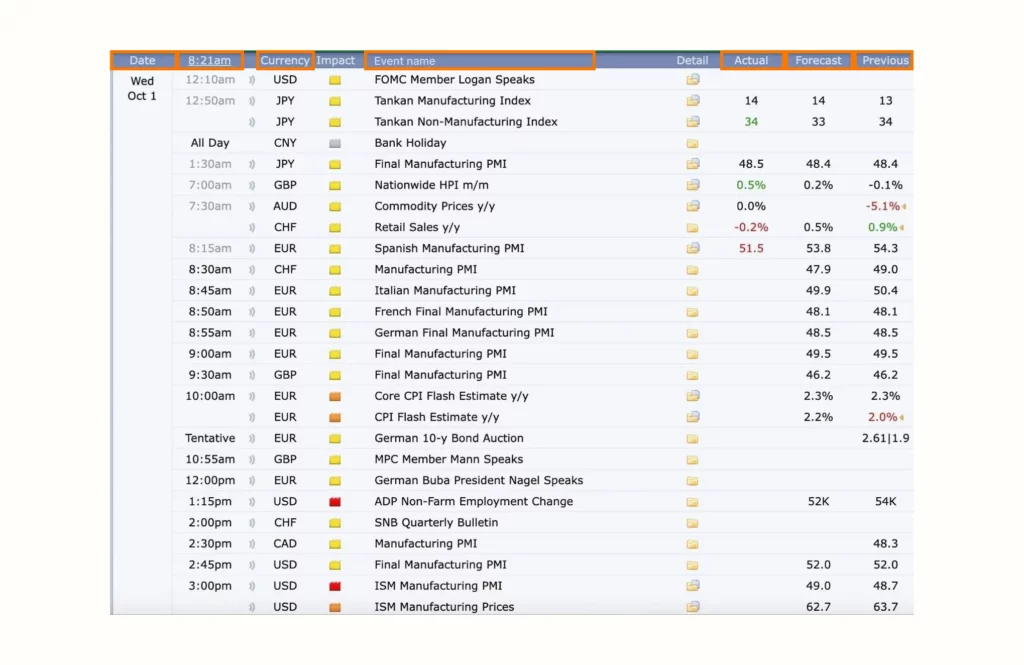
In this section, we’ll show you how to read an economic calendar for forex step by step so you can plan your trades around high-impact events. You will usually find economic calendars displayed in a table format with several columns of information, such as the date, time, event name, currency or country affected, what was reported before (previous), what is expected (forecast), and what is released (actual).
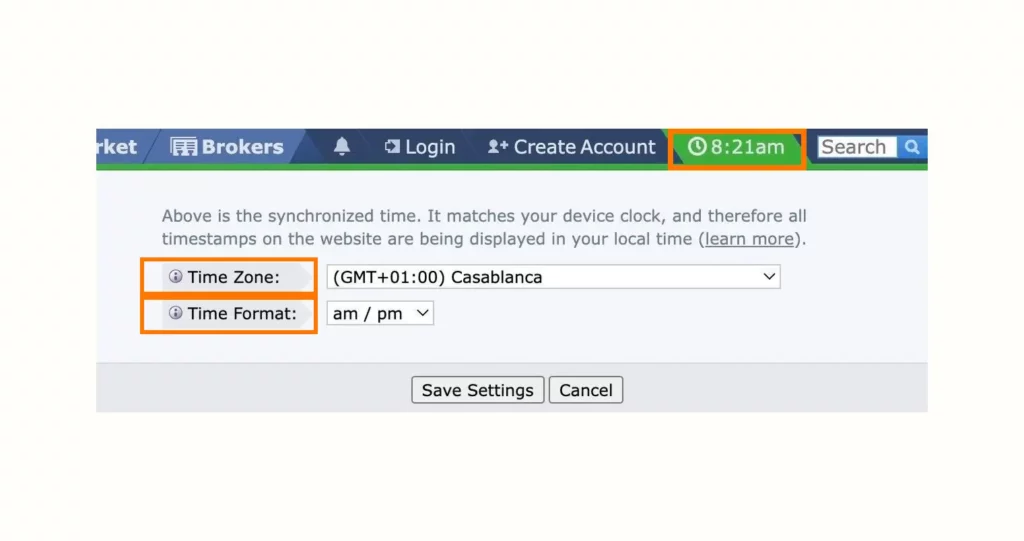
- Set your timezone and filters:
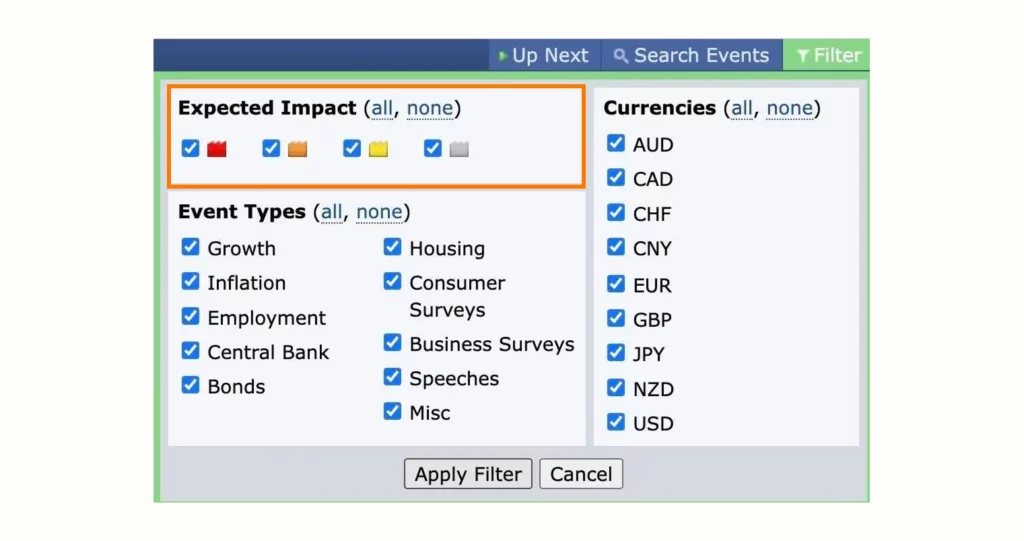
Most economic calendars let you adjust the timezone. Always set it to your local time so you know exactly when events happen in your trading day. Use filters to narrow the calendar to the currencies of countries you focus on, and highlight only medium or high-impact events.
- Do a daily scan:
Before placing any trades, scan the day’s events. This quick check tells you when volatility might occur. For example, if the Bank of England is releasing its interest rate decision, GBP pairs like GBP/USD, GBP/JPY, and EUR/GBP may move sharply around that time. If it’s U.S. Non-Farm Payrolls, then USD pairs such as EUR/USD, GBP/USD, or USD/JPY often see the biggest reaction. To do a daily scan you need to understand the colour codes in the economic calendar:
Color Codes on Economic Calendars
- Red (High Impact): These events often cause strong volatility. Examples: Interest rate decisions, Non-Farm Payrolls (NFP), central bank press conferences.
- Orange/Yellow (Medium Impact): Can cause moderate moves, but not always. Examples: inflation reports, retail sales, unemployment claims.
- Gray/Low Impact: Usually creates little to no market movement. Examples: small economic surveys or minor speeches. You don’t need to focus much on these.
- Read the key columns:
Every calendar is structured with several columns. The most common are:
- Date/Time: The time and date the event or release is scheduled.
- Event Name: The type of data (GDP, CPI, unemployment rate, central bank speech).
- Currency/Country: The market the event directly impacts.
- Impact Level: Often marked with colors or icons (low, medium, high).
- Previous, Forecast, Actual: The values that show past results, market expectations, and the released figure. These figures are some of the most important on any forex calendar because they help traders compare what was expected with what actually happened, which often determines the strength and direction of market reactions.
- Understand “Previous”, “Forecast”, “Actual”
The previous column shows the last reported value for that economic indicator. For example, if last month’s unemployment rate was 3.6%, that number will appear under “previous.” This gives you a baseline to compare new data against.
The forecast column shows what analysts and economists expect this time. Forecasts are important because markets often move based on whether the actual number beats or misses this expectation.
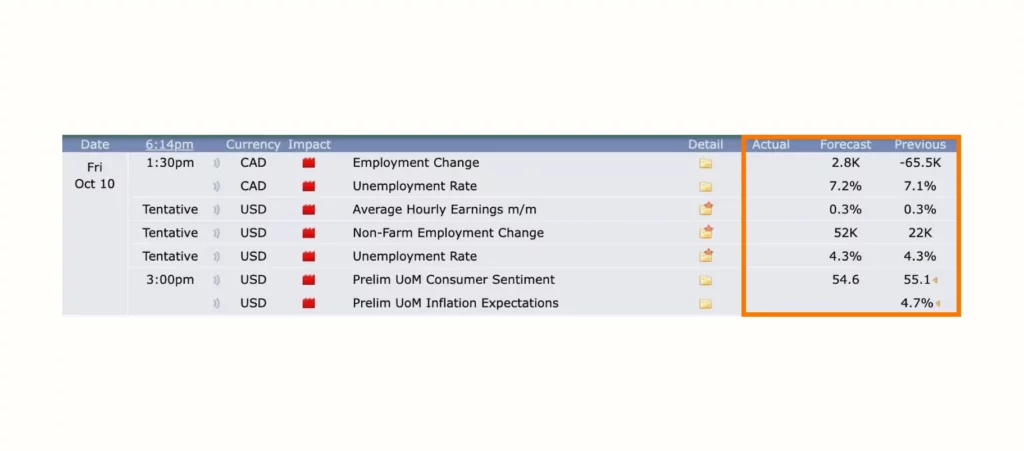
Example:
If unemployment was previously 3.6%, the forecast is 3.5%, but the actual release shows 3.2%, it signals stronger employment. The currency is likely to gain because the economy looks healthier than expected.
The key for you as a trader is this: don’t just look at the number itself. Focus on whether the actual release beats or misses the forecast. That surprise factor is what moves the market and creates opportunity.
Key Forex Events to Watch on Your Economic Calendar
Knowing how to read an economic calendar for forex helps you identify which events, like FOMC meetings or NFP releases, will likely move the markets.
FOMC Meetings and Fed Rate Decisions
The FOMC stands for the Federal Open Market Committee. It’s a group inside the Federal Reserve (the U.S. central bank) that meets about 8 times a year to decide on one main thing: interest rates.
Interest rates are simply the cost of borrowing money. When you borrow from a bank, you pay interest. When banks borrow from each other or from the Fed, they also pay interest. That rate flows into the whole economy.
Here’s how it works in trading terms:
- If the FOMC raises interest rates, the U.S. dollar usually strengthens.
- If the FOMC cuts interest rates, the dollar weakens.
Now, how do you see this on your economic calendar?
- Previous shows the last interest rate.
- Forecast shows what analysts expect this time.
- Actual is what the FOMC announces.
Non-Farm Payrolls (NFP)
NFP measures how many jobs the U.S. added in the past month, excluding farms and government. More jobs mean the economy is strong, which is good for the dollar. Fewer jobs show weakness.
On your calendar:
- Previous: shows last month’s job number.
- Forecast: is what the market expects this time.
- Actual: is the real figure.
If actual jobs are much higher than forecast, the dollar strengthens. If much lower, it weakens.
Consumer Price Index (CPI)
CPI measures inflation, or how fast prices of goods and services are rising. High inflation usually pushes the Fed to raise rates, which boosts the dollar. Low inflation suggests weaker policy and hurts the dollar.
Fed Chair Speeches
When Powell speaks, the market listens. He explains how the Fed sees the economy and where rates might go. His tone matters as much as numbers. Hawkish (tough on inflation) usually pushes the dollar up. Dovish (soft, signaling cuts) often drags it down.
Here you don’t have Previous or Forecast. The surprise is in the wording. Traders compare what he says now to what was said before. If the tone changes, markets move.
ECB Meetings and Rate Decisions
The ECB sets interest rates for the euro. The main focus is on the deposit facility, main refinancing operations, and marginal lending facility. Just like the Fed, higher rates strengthen the euro, lower rates weaken it. The press conference after the decision is often the real mover.
How to Apply Your Economic Calendar to Forex Trading Strategies
Once you understand how to read an economic calendar for forex, you can adjust your trading strategy, manage risk, and avoid entering trades right before major news releases.
- Check the calendar daily before the market opens. Highlight high-impact (red) events for the currencies you trade.
- Use Previous, Forecast, and Actual to anticipate market reactions. If last month’s unemployment was 3.6%, the forecast is 3.5%, but the actual comes out 3.2%, the dollar is likely to spike.
- Plan your trades around the events:
– Avoid entering new trades right before major releases.
– Adjust your position size; big news can create sudden, sharp swings. - Focus on the big events (FOMC, NFP, CPI, ECB meetings). Minor reports usually don’t move the market enough to justify risk.
Common Mistakes When Reading an Economic Calendar for Forex Trading
- Trading blindly on the number: Don’t just see a high or low figure and jump in. Always compare it to the forecast and previous values. For example, a higher-than-expected NFP is not automatically a buy signal.
- Ignoring volatility risk: New events can cause spikes and can trigger slippage, so avoid using maximum leverage before major releases like FOMC or CPI.
- Overtrading after news: Some traders chase every move after a release. Wait for the market to stabilize; watch for the first clear candle pattern or retracement.
- Focusing on too many events: Reacting to every minor report spreads your attention and increases mistakes. Stick to the top movers.
Bottom line
By learning how to read an economic calendar for forex, you’ll gain an edge in anticipating market moves and making informed trading decisions. Highlight only high-impact events, pay attention to forecast vs actual surprises, and plan your trades with clear rules. Doing this will reduce mistakes and help you trade more confidently.