Backtesting Trading Strategies: Tips for Prop Firm Challenges - Maven Trading
Written by Hunter on April 13, 2026.Introduction
Backtesting trading strategies is essential for every trader before risking real capital. Backtesting trading strategies ensures your system works under real market conditions instead of relying on guesswork or theory. In this guide, you’ll learn how to effectively backtest trading strategies to refine your system before entering a prop firm challenge.
In this article, you’ll learn:
What are Backtesting Trading Strategies?
Backtesting trading strategies involves testing a trading system using historical price data to see how it would have performed in the past. By simulating trades under real market conditions, you can evaluate whether your approach provides a consistent edge or just appears profitable in hindsight.
Why Backtesting Trading Strategies is Crucial
1. It protects you from wasting time on systems that never worked
Do you know some traders jump on a new strategy and never backtest it? Then when it fails, they’re left wondering what went wrong. The truth is, a strategy you haven’t tested first, probably won’t work. Maybe it will, but the odds aren’t in your favour.

Backtesting protects you from wasting time on strategies that were never viable in the first place. Some of these strategies may look good at first, some might even win a few trades in the beginning but eventually they start to fall apart. You might blame your execution or mindset, but more often than not, the strategy itself is flawed. Backtesting spots that early, so you don’t waste months trading a system destined to fail.
For example, imagine a trader who just learned a piece of the ICT strategy but didn’t backtest it. After a losing streak, he finally backtests and finds the strategy only has a 25% win rate on the pair of his choice. Suddenly, he realizes the problem was never his discipline like he thought, but the system itself.
2. It helps you identify and refine your strategy
Backtesting helps you spot what gives your strategy an actual advantage in the market. Without testing, you’re relying on gut feeling. With it, you’re making informed adjustments backed with data.
Here is an example of how backtesting can help you refine your strategy: Imagine you trade the pullback strategy using a 50 EMA. You had tested it on USDJPY across a year’s worth of data and the win rate sits around 54%. After using this strategy for 5 months, you decided to test it again using the 21 EMA and the win rate climbed to 85%. Would you be sticking to the 50 EMA or the 21 EMA?
3. It helps you understand how your strategy behaves under different conditions
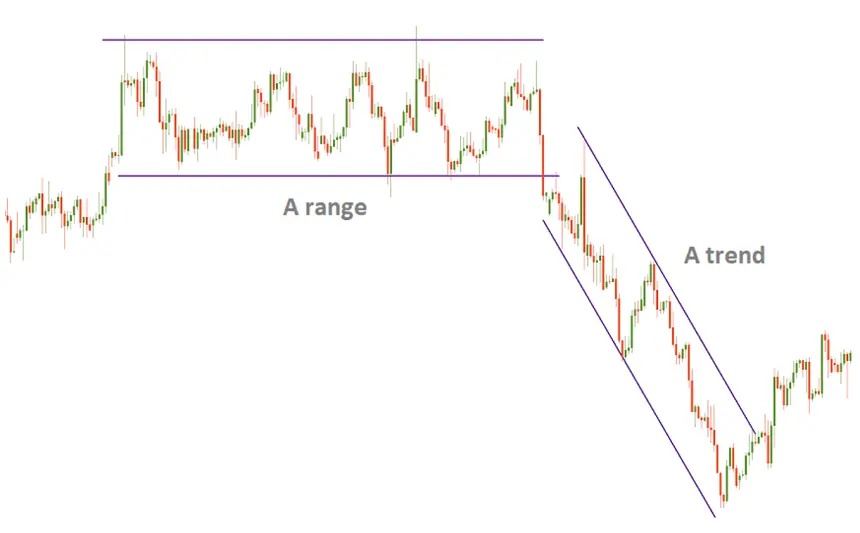
Backtesting helps you see how your strategy holds up across different market conditions. Real trading isn’t just clean trends. Sometimes the market is choppy, sometimes it spikes, sometimes nothing happens at all. When you backtest, you see exactly where your system performs best and where it falls apart. It could be that it does well during London trends but fails in Asian ranges. That insight helps you know when to trade aggressively, and when to sit out.
4. It builds confidence in your system
Confidence comes from repetition and proof. When you see a strategy win over hundreds of trades during backtesting, you stop second-guessing it in live conditions. You start trusting the process and that trust matters, it changes everything especially when the system hits a losing streak. Instead of panicking, you’re able to keep executing with discipline because the data has already shown that losses are part of the outcome.
5. It teaches you how different pairs behave
Every market moves differently. Some pairs trend cleanly, others reverse more often, some respond to session opens, others don’t move for hours after the market opens. Backtesting reveals these behaviors. It helps you understand how your strategy fits each pair, and which ones are worth focusing on. You become more selective, more efficient, and less reliant on assumptions.
So now you know why backtesting matters but just knowing it’s important isn’t the same as knowing how to backtest properly which is where these next tips come in.
6 Backtesting Trading Strategy Tips Every Trader Should Know
Before risking a single dollar in the market, you need to know exactly how to backtest your strategy the right way. Without proper preparation, you’re setting yourself up for disappointment or worse, a blown account. These seven tips will help you build a strategy that is not only realistic but also potentially profitable over time.
1. Have a Well-Written Plan
If your strategy isn’t clear on paper, it won’t be clear in testing. A written plan ensures your backtesting process is organized and objective. It helps you evaluate results with consistency, replicate your process when needed, and avoid errors that usually come from emotional or impulsive decisions.

Your plan should define what you’re testing, such as:
- Entry criteria: What are you looking for before you take a trade?
- Exit logic: Where do you take profit? What signals a good time to close early?
- Risk per trade: Are you risking 1 percent, half a percent, or fixed lots?
- Trade management: Are you moving stops to breakeven? Scaling out? Letting it run?
2. Use Quality Historical Data
The goal of backtesting is to get consistent, reliable results that prove your strategy actually works and you can’t do that with broken data. Low-quality historical data gives you messy metrics. You need clean, accurate market data that reflects real price movements, correct time zones, and full candlestick information.
A solid place to start would be the good old TradingView. It offers reliable historical data across multiple pairs, timeframes, and chart types, everything you need to test with precision.
3. Simulate Real Market Conditions
One of the biggest mistakes traders make is testing their strategy in an environment that doesn’t match real conditions as closely as possible. That includes accounting for spread variations, slippage, execution delays, and market gaps.
Illustration: Let’s say your strategy performs well with zero spread and no slippage but in real life, your broker adds a 2-pip spread. If your setups rely on precise entries and exits, that spread will eat your edge entirely. Backtesting without this factor gives you false results.
4. Tracking Key Metrics in Trading Strategy Backtesting
Backtesting isn’t just about checking if a strategy “made money”, it’s about understanding how it made money and what it cost you emotionally and financially. That’s where performance metrics come in.
Focus on the basics:
- Win rate – how often you’re right
- Profit factor – total gains vs total losses
- Risk-to-reward ratio – how much you risk to make a return
- Maximum drawdown – your worst loss from peak
- Number of trades – to test consistency over time
Let’s say a strategy made 20 winning trades, but it took 35 losing trades to get there. It might not be worth it. Drawdowns show you how much pain you’d have to sit through in a live market. If you don’t account for that in your backtest, you might lose real money.
Make sure to compare your results across different:
- Timeframes – Does it fall apart on the 1H vs 4H?
- Sessions – London open vs Asia chop
- Market conditions – Does it tank during news or high volatility?
If your system breaks every time things get volatile, avoid volatility altogether.
5. Front-Testing Your Backtesting Trading Strategies
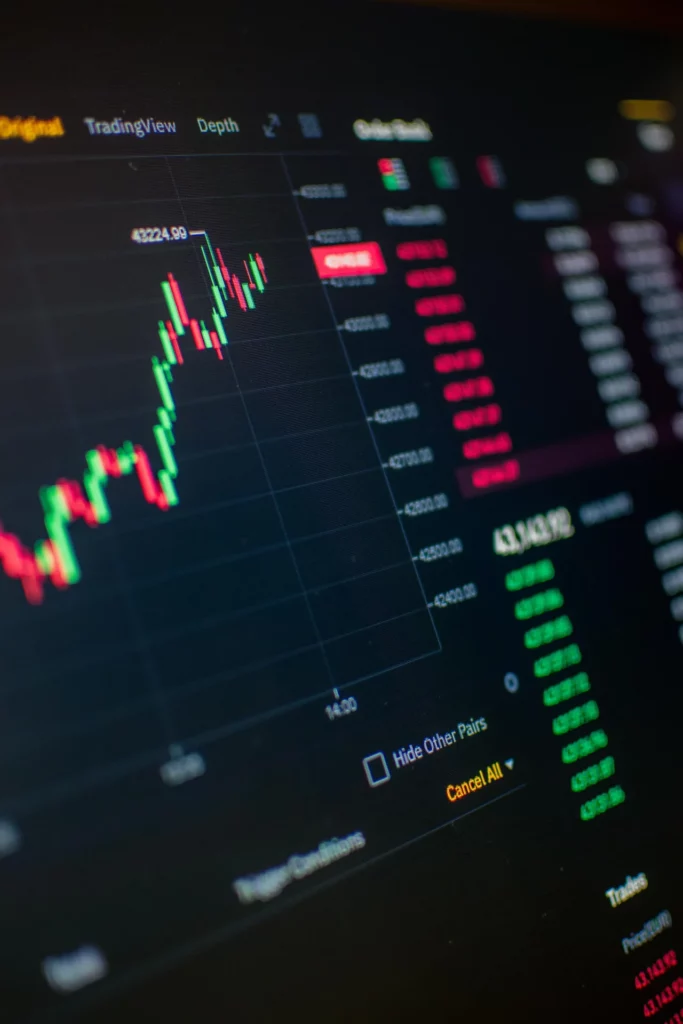
Once you’ve backtested and seen good results, the next step is to front-test. This is also called paper trading. It lets you take your strategy into a live chart environment without risking real money. It’s the closest thing to going live without the stress.
Front-testing confirms whether your system holds up when you’re clicking the button in real time. It also shows how delays, distractions, and execution gaps affect your trades. It’s a key part of how to backtest properly and transition with confidence.
6. Refine Your Strategy
Even strong strategies need tuning. Backtesting shows you where your rules might be too aggressive, too passive, or too dependent on specific conditions. Refine your system by adjusting your rules and rechecking the results but don’t over-optimize.
The goal is to increase stability without building a strategy that only works on past data. If you’re serious about how to backtest like a pro, refinement and validation are essential.
Final Thoughts
Done correctly, backtesting trading strategies is one of the most powerful tools for any trader. It refines your system, builds confidence, and ensures your strategy is prepared for real market conditions. Use structure, quality data, and patience to avoid common pitfalls and approach prop firm challenges with clarity and confidence. If your backtests are strong and you’re ready to validate your system in a real environment, Maven provides a clear path to funding.