Avoid decision fatigue in your trading
Written by Emma on March 30, 2026.Trading focus and consistency is the foundation of long-term profitability. Without it, even the best strategy breaks down into impulsive entries, poor risk management, and emotional decision-making. Long trading sessions amplify these mistakes – which is why protecting your focus matters.
In this guide, we’ll cover:
- The science behind decision fatigue and its impact on trading
- Evidence-based preparation strategies for optimal performance
- Practical techniques to maintain focus during active trading
- How to recognize and overcome common focus killers
The science of trading nutrition
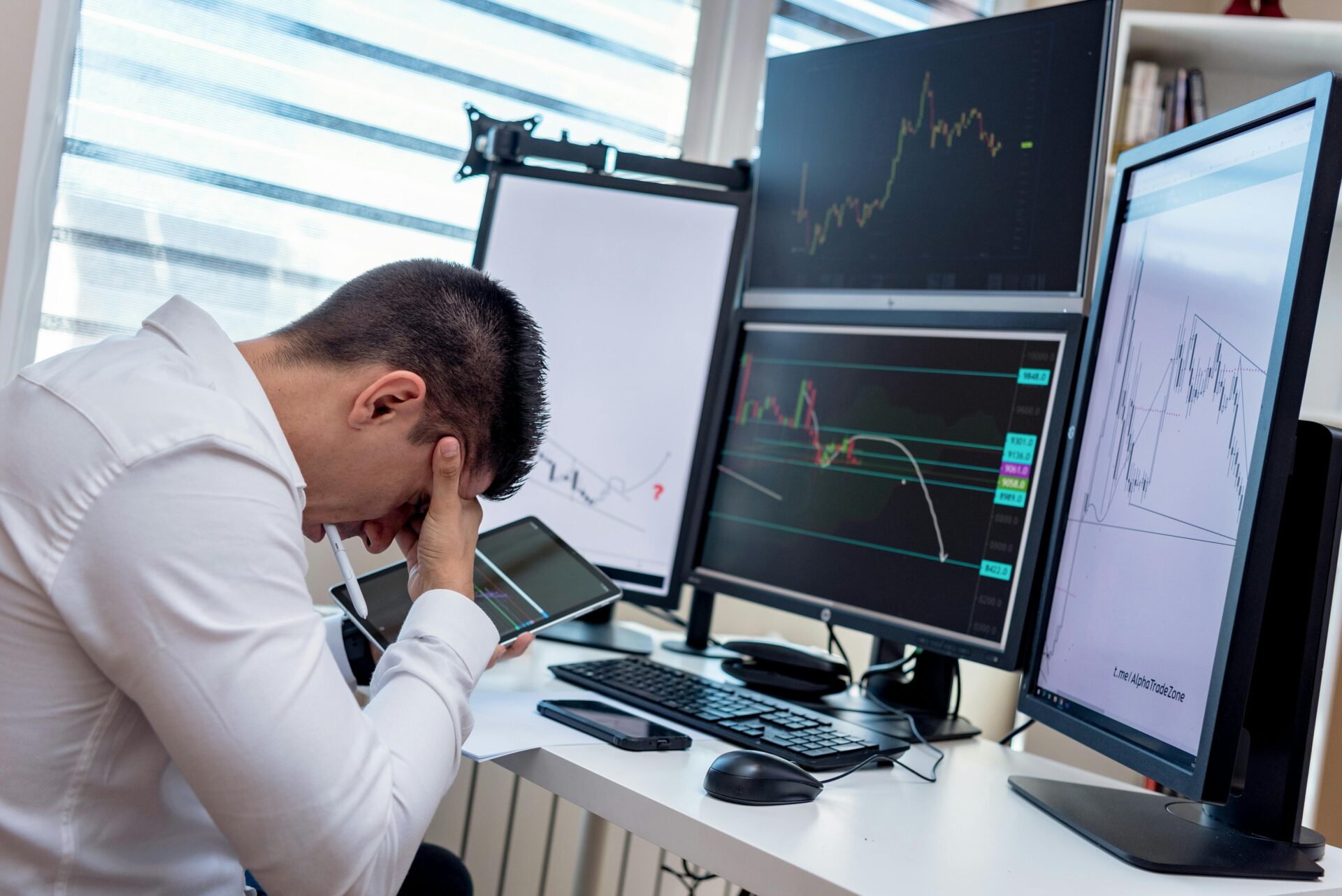
Decision fatigue is the gradual decline in decision quality after making too many choices. It’s why you can be patient and selective early in the session, then start justifying trades you’d normally skip later on. Ultimately, your brain requires rest.
What happens in your brain?
Your prefrontal cortex, (the part of your brain responsible for rational decision-making and risk assessment), becomes less efficient as mental load builds.
That’s when you see:
- More impulsive entries
- Looser risk management (ignored stops, bigger size)
- Overtrading disguised as “more opportunity”
- Emotional decisions dressed up as analysis
The good news: once you expect decision fatigue, you can design your routine to reduce it.

Evidence-based preparation strategies for optimal performance
Get actual sleep (yes, really)
Trying to trade on five hours of sleep is like trying to run a marathon in Crocs. Possible? Yes, but why would you want to? If you stay up until 2 AM scrolling TikTok, don’t expect to make smart decisions at 9 AM when the London session opens.
Quality sleep supports:
- Attention and focus across multiple timeframes
- Risk assessment and probability thinking
- Emotional regulation and impulse control
- Faster reaction time to market changes
Aim for 7-9 hours of quality sleep, especially on days you plan to trade longer sessions.
Plan your session before it starts
Walking into a trading session without a plan is like going grocery shopping when you’re hungry; you’ll end up with stuff you don’t need and regret it later.
Write this down physically before every trading session:
- Your trading hours.
- Maximum number of trades (e.g., “Three quality setups maximum”)?
- Which pairs are you focusing on?
- What market events are happening?
It’s harder to break a rule you literally wrote down an hour ago.
Set up your environment
Your physical environment has a profound impact on how your brain functions. Even small distractions can break your attention and reduce decision-making quality.
| Physical environment setup | Digital environment setup |
| Clean, organized desk to minimize visual distractions. | Close all social media tabs and applications |
| Comfortable, ergonomic chair that supports proper posture. | Disable email and messaging notifications |
| Proper lighting that reduces eye strain (natural light is optimal). | Close Discord, Telegram, or other trading group chats |
| Water bottle within easy reach to maintain hydration. | Have your trading journal open and ready to use |
| Phone on silent or in another room entirely. | Keep only essential charts and tools visible |

Nutritional foundation for cognitive performance
What you eat directly impacts your brain’s ability to function at peak capacity. Your brain consumes approximately 20% of your body’s total energy, despite representing only 2% of body weight.
The science of trading nutrition
A balanced breakfast with protein, healthy fats, and complex carbohydrates provides sustained energy release throughout your trading session. Think eggs and avocado on whole-grain toast, not sugary cereal that’ll spike your blood sugar and have you crashing by 10 AM. When your blood sugar drops sharply, your decision-making quality drops with it.
Keep healthy snacks nearby: nuts, fruits, or protein bars can maintain stable blood glucose levels throughout extended trading sessions. Avoid simple sugars and highly processed foods that create energy crashes.
Practical techniques to improve trading focus and consistency
These techniques are designed to strengthen your trading focus and consistency during active market hours.
Once your trading session begins, maintaining focus requires deliberate strategies and structured approaches. These techniques help you sustain attention, make better decisions, and avoid the fatigue that destroys trading accounts.
1. Time-blocking: the Pomodoro technique for traders
The Pomodoro Technique is a time management method developed by Francesco Cirillo in the late 1980s. It involves working in focused intervals (traditionally 25 minutes) separated by short breaks. For trading, we adapt this to longer intervals that align with market rhythms.
How to apply this to trading
Work in focused blocks of 45-50 minutes of active chart analysis and trade management, followed by 10-15 minute breaks completely away from screens. During breaks, resist the urge to scroll Twitter “to see what the top traders are saying.” Instead, step outside, stretch, grab a healthy snack, literally anything except staring at more screens.
Funnily, some of your best trade ideas will come when you’re NOT staring at the charts. This phenomenon occurs because breaks allow your default mode network (DMN) to activate, which is responsible for creative problem-solving and pattern recognition.
2. Selective attention: The focus funnel approach
Having twelve charts open across three monitors might make you feel like the Wolf of Wall Street, but it’s probably destroying your focus. The human brain is fundamentally incapable of processing multiple complex tasks simultaneously. So, what feels like multitasking is actually rapid task-switching, which depletes your mental resources faster. Reducing chart overload protects your trading focus and consistency.
The two-to-three pair maximum rule
Pick 2-3 pairs maximum per session and study them deeply. Use watchlists to monitor other opportunities, but keep only your primary focus pairs as active charts. This approach helps you focus, and you actually see more meaningful patterns and make better decisions.
Quality over quantity isn’t just about trades; it’s about focus, too. Deep knowledge of fewer pairs beats superficial awareness of many pairs every single time.
3. The pre-trade checklist
A pre-trade checklist serves as a mental circuit breaker. It is a mandatory pause that prevents impulsive decision-making. Professional pilots use checklists before every flight, not because they don’t know what to do, but because checklists are critical when stress or fatigue sets in. Consistently using a checklist improves trading focus and consistency over time.
Essential checklist items
Before you click “Buy” or “Sell,” run through this every single time:
- Does this setup match my defined strategy criteria?
- Is my risk-reward ratio at least 1:2 or better?
- Where exactly is my stop-loss, and does it make technical sense?
- Where are my take-profit targets based on key levels?
- Am I trading based on logic and strategy, or emotion and impulse?
This checklist forces a deliberate pause, and that pause is where emotional trades go to die. The few seconds it takes to verify these items can save you from costly mistakes that occur when decision fatigue takes over.
4. Journal in real-time
Most traders journal after their trading session ends, which is valuable for pattern recognition. However, real-time journaling serves a different purpose: it keeps you present and prevents autopilot mode from taking over.

How to journal in real-time
Write quick, concise entries as you trade: “Taking EUR/USD long at 1.0850~clean liquidity sweep at the low, entering on FVG retracement with confirmation from higher timeframe structure.” This practice activates your analytical mind and makes it significantly harder for impulsive, emotion-driven decisions to slip through.
The act of articulating your reasoning forces you to verify that solid reasoning actually exists.
How to recognize and overcome common trading focus killers
- Social media and trading groups: You check your mentors X account and twenty minutes later, you’ve missed a setup. Close it all. Other people’s trade ideas are distracting at best, dangerous at worst.
- Overtrading: Each trade requires mental energy. Set a maximum of 3-5 trades per day. If you’re tempted to take a sixth, ask yourself: “Is this an A+ setup, or am I just bored?”
- Multitasking: Your brain can’t do two mental tasks at once. Trading time is trading time. Everything else can wait.
- Unclear Rules: Make your rules crystal clear: “I only trade retracements to FVG after a liquidity sweep with 1:3 R: R.” No debate. It either fits or it doesn’t.
- FOMO: There will ALWAYS be another trade. The market doesn’t care if you sat this one out, but your account definitely cares if you jumped into a moving train at the worst possible moment.
Building long-term consistency
Long-term trading success is not about perfection. It is about protecting your trading focus and consistency every single day.
Same Time, Same Routine: Trade at the same time each day. Your brain loves patterns. Like Pavlov’s dog, but for charts.
Review Weekly: What killed your focus? When did you make your best trades? Write it down and adjust.
Rest Days Matter: Sometimes the best trade is no trade. Take days off when tired or stressed. One day of rest is cheaper than one day of revenge trading.
Final thoughts
Trading is largely a game of probability, and that means our edge is not always the precision of our strategy but sometimes the ability to be more focused and disciplined than the trader who’s been staring at charts for nine hours while simultaneously watching Netflix.
Focus and consistency are low-hanging fruits that most traders ignore. Everything here is actionable; you can start tomorrow. You just need to respect your brain, take care of your body, and be honest about when you’re capable of making good decisions.
Trading is hard enough at 100%. Don’t make it impossible by trying to do it at 40%.
The traders who win long term are the ones who prioritize trading focus and consistency over excitement and overtrading.
Before you go
If you’re serious about trading with focus and consistency, you need an environment that supports that. Maven prop firm challenges are designed with clear rules, reasonable targets, and trader-friendly conditions. Check out the Maven challenge options and find the one that fits your trading style.
FAQs: focus and consistency in trading
Most traders perform best in 1-3 hour sessions with breaks. Anything beyond 3 hours and your decision-making quality drops significantly.
When YOU are most alert. For most people, that’s the first few hours after waking up.
Set a hard rule: after any loss, take a mandatory 30-minute break. If you’ve hit your daily loss limit, you’re done, no exceptions.
Quality over quantity. For most traders, 2-5 high-quality setups per day is plenty.